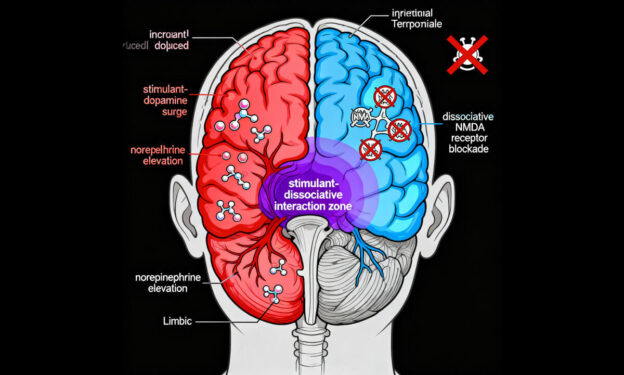
The combination of cocaine and ketamine, often referred to on the street as “Calvin Klein” or “CK” has emerged as one of the most alarming trends in recreational drug use. Both substances independently pose severe health risks, but together, they create a volatile and unpredictable cocktail that amplifies psychological and physiological dangers.
Two Potent Substances, Opposite Effects
Cocaine is a powerful central nervous system stimulant that increases alertness, energy, and euphoria by blocking the brain’s reuptake of dopamine and norepinephrine. It sends the body into overdrive, raising heart rate, blood pressure, and body temperature while triggering intense feelings of confidence and power.
Ketamine, on the other hand, is a dissociative anesthetic originally developed for surgical use. At low doses, it distorts perception and induces dream-like or out-of-body experiences; at higher doses, it can render a user completely detached from reality, sometimes entering what’s known as a “Khole.” Over the past decade, ketamine has also gained medical attention for its rapid antidepressant effects. However, outside of carefully controlled environments, it remains a drug with high abuse potential.
When these opposite-acting drugs are combined, one stimulating, the other dissociative; the results can be catastrophic. The stimulant property of cocaine masks the sedative impact of ketamine, encouraging users to take higher doses and pushing the body beyond its physiological limits.
The “Designer Drug” Effect
The mixture of cocaine and ketamine has been dubbed the “designer drug” for its perceived luxury and intensity. Some users claim the stimulant counters ketamine’s disorientation, offering what they believe is a “balanced high.” Others say ketamine softens cocaine’s harsh comedown. These assumptions mask a dangerous misunderstanding of how differently these compounds act on the brain.
Both drugs profoundly affect the dopamine system. Cocaine causes an abnormal buildup of dopamine by preventing its reabsorption, while ketamine alters glutamate signaling, disrupting normal brain communication. Together, they trigger chaotic surges of neurotransmitters responsible for euphoria, motivation, and reward—followed by dramatic crashes that can lead to paranoia, anxiety, and psychosis.
Dangerous Physical Reactions
Combining cocaine and ketamine severely strains vital organs and systems:
- Cardiovascular overload: Cocaine accelerates the heart, while ketamine interferes with blood pressure regulation. The heart must work harder under conflicting signals, drastically increasing the risk of arrhythmia, stroke, or cardiac arrest.
- <Respiratory suppression: While cocaine stimulates, ketamine can depress respiratory function. This combination confuses the brain’s ability to maintain breathing rhythm, potentially leading to hypoxia or respiratory collapse.
- Body temperature and dehydration: Elevated temperature and rapid dehydration can occur, particularly in club or party settings where users are dancing or consuming alcohol. Extreme hyperthermia may cause organ failure or death.
- Gastrointestinal and urinary damage: Chronic ketamine use causes bladder inflammation and ulcerative cystitis; adding cocaine accelerates kidney strain and toxicity.
Psychological and Neurological Impact
The interaction between these substances on the brain is especially hazardous. Cocaine increases stimulation and dopamine release, heightening alertness and impulsivity. Ketamine, however, disrupts connections between brain regions, causing hallucinations, detachment, and a warped sense of time. Together, they may produce:
- Severe disorientation or psychosis
- Panic attacks and paranoia
- Sudden mood swings or violent outbursts
- Cognitive impairment or memory loss
- Heightened risk of long-term depression and anxiety
Prolonged or recurrent use rewires the brain’s reward system, reducing baseline dopamine sensitivity. Over time, this leaves individuals emotionally blunted and dependent on chemical stimulation for any sense of pleasure.
The Illusion of Control
Many users mistakenly believe mixing cocaine and ketamine allows them to “balance out” the effects. In reality, one drug’s influence hides the warning signs of the other’s toxicity. Someone who feels energetic from cocaine might underestimate ketamine’s sedative depth, leading to overdose. Conversely, the calm from ketamine can make individuals take more cocaine, further straining the cardiovascular system.
Even a seemingly “small” or “recreational” amount can produce unpredictable, lifethreatening outcomes. Factors like body weight, tolerance, and purity make dosing extremely unreliable, especially since both cocaine and ketamine are frequently adulterated with fentanyl and other toxic additives in the illicit drug market.
The Overdose Risk
A “Calvin Klein” overdose often presents as a confusing hybrid of stimulant and sedative crises: erratic heartbeat, shallow breaths, confusion, tremors, and unconsciousness. Without immediate medical intervention, the dual stress on the heart and lungs may lead to cardiac arrest or respiratory failure.
Emergency responders sometimes struggle to treat mixed-substance overdoses because the symptoms contradict one another requiring both resuscitation for stimulant effects and airway protection for sedative suppression.
Long-Term Consequences
Repeated use of cocaine and ketamine in combination increases the likelihood of enduring mental health conditions such as substance-induced psychosis, chronic anxiety, and cognitive decline. Physiologically, users may experience significant damage to the heart, liver, and kidneys. Ketamine abuse alone can cause ulcerative cystitis, a painful and sometimes irreversible bladder condition; combined with cocaine’s vascular effects, organ damage can escalate quickly.
Dependence is another critical risk. Both cocaine and ketamine influence brain chemistry in ways that reinforce compulsive use. The heightened dopamine and glutamate disruption create strong cravings and emotional withdrawal even after short-term abuse.
A Warning for Party Culture
Among younger populations, especially in club environments, the cocaineketamine combination has gained a reputation as an “elite” or “social” drug. The myth that the pairing is harmless because it blends opposing effects is false—and deadly. Health professionals report a rise in emergency visits related to polysubstance use, while toxicology data show that the majority of ketamine-related fatalities also involve another stimulant, most often cocaine.
Seeking Help
Polysubstance dependence—whether involving stimulants, depressants, or dissociatives, requires specialized care. Medical detox programs can manage withdrawal safely, addressing both the physical dangers and psychological cravings associated with multidrug use. Evidence-based treatment approaches focus on neurochemical balance restoration, emotional stabilization, and long-term relapse prevention.
If someone is mixing or abusing cocaine and ketamine, it is essential to seek professional help immediately before health consequences become irreversible. Modern addiction treatment centers offer tailored medical and therapeutic programs that address the combined complexities of stimulant and dissociative dependence.
The Bottom Line
The synergy between cocaine and ketamine is not exciting or “designer”, it’s deadly. The stimulant rush of cocaine paired with ketamine’s dissociation creates a powerful illusion of control that often ends in overdose or lasting harm. Despite differing pharmacological actions, both substances converge on the brain’s reward pathways, destabilizing the very systems responsible for motivation, memory, and survival instinct.
No matter how sophisticated the setting or intention behind use, the Calvin Klein combination is among the most medically dangerous drug pairings known today.
Sources:
- University of California San Diego (2025) – Ketamine Use on the Rise in U.S. Adults; New Trends Emerge
Scientific update confirming a surge in recreational ketamine use among young adults, linking it to polysubstance abuse risks.
https://today.ucsd.edu/story/ketamine-use-on-the-rise-in-u.s-adults-new-trends-emerge - Rehab Clinics Group (2025) – The Dangers of Mixing Ketamine and Cocaine
Explores physiological and psychological effects of combining stimulants and dissociatives such as cocaine and ketamine.
https://rehabclinicsgroup.com/the-dangers-of-mixing-ketamine-and-cocaine/ - Case Western Reserve University (August 2025) – New Study Reveals Ketamine Could Be Effective in Treating Cocaine-Use Disorders
Discusses how ketamine shows promise in medically supervised use for cocaine addiction, emphasizing the need for caution in unsupervised mixing.
https://case.edu/news/new-study-reveals-ketamine-could-be-effective-treatment-cocaine-use-disorders - BBC News (February 2025) – Ketamine Addict Warns of Drug’s Impact on Users
Provides firsthand accounts and current statistics surrounding ketamine misuse and its rapid growth among Gen Z populations.
https://www.bbc.com/news/articles/c0jn6djy14jo - National Institute on Drug Abuse (2024 update) – Ketamine Drug Profile
Official U.S. resource detailing ketamine’s medical use, addictive properties, and neurological effects.
https://nida.nih.gov/research-topics/ketamine - CDC (September 2025) – Vital Statistics Rapid Release: Drug Overdose Data
Provides national data on cocaine and stimulant-related overdose deaths.
https://www.cdc.gov/nchs/nvss/vsrr/drug-overdose-data.htm - World Drug Report 2025 – United Nations Office on Drugs and Crime (UNODC)
Documents the global increase in cocaine trafficking and rising stimulant-related fatalities.
https://www.unodc.org/documents/data-and-analysis/WDR_2025/WDR25_B1_Key_findings.pdf - FHE Health (October 2025) – Tusi (2C): A New Ketamine Concoction
Explains emerging “designer” mixtures that combine ketamine with other stimulants, confirming parallels with the “Calvin Klein” trend.
https://fherehab.com/learning/tusi-2c-new-ketamine-concocotion/ - Herdman Health (January 2025) – Rising Trends in Recreational Ketamine Use: A Public Health Perspective
Medical review explaining rising ketamine misuse rates among U.S. young adults and associated dangers when combined with other substances.
https://www.herdmanhealth.com/2025/01/19/rising-trends-in-recreational-ketamine-use-a-public-health-perspective/ - Drug Abuse Statistics (October 2025) – Substance Abuse and Polydrug Overdose Data
Latest national figures on stimulantrelated fatalities and substancemixing trends.
https://drugabusestatistics.org/